
The Fed Paused. The Market Celebrated. Alternatives Investors Shrugged.
April 29, 2026
Your Accountant Files Your Taxes. Your Advisor Should Be Preventing Them.
May 28, 2026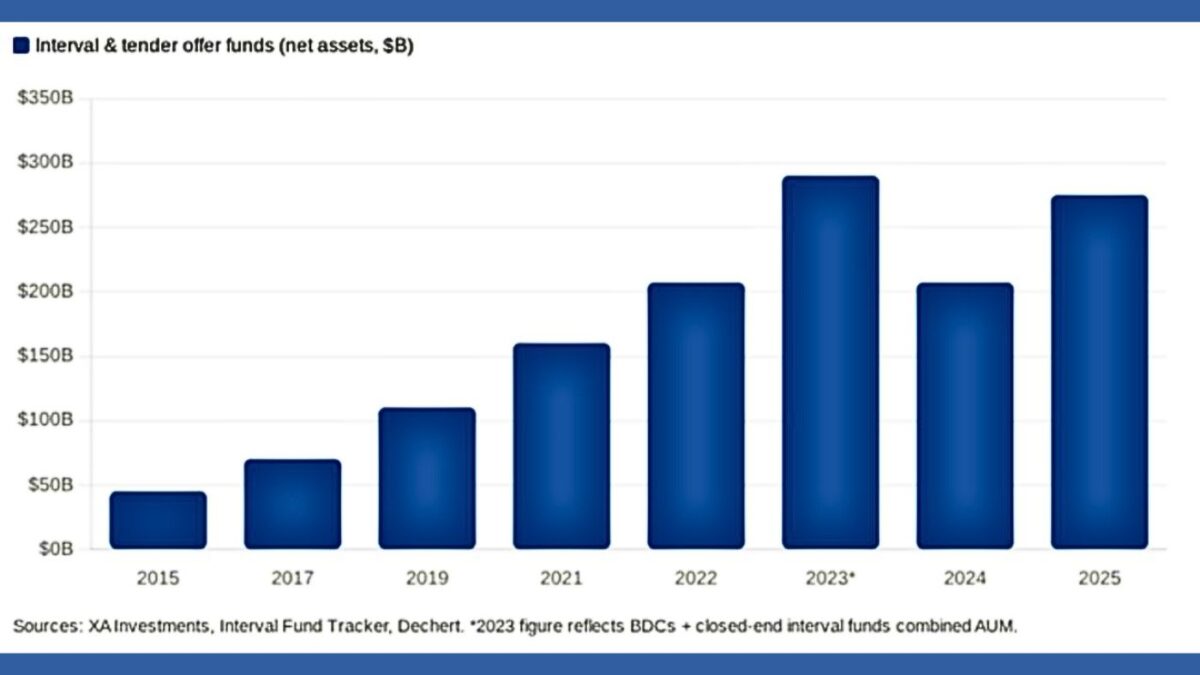
For most of investing history, the best alternative investment opportunities were effectively off limits to anyone who was not a large institution or an ultra-high-net-worth individual. Endowments, pension funds, and family offices had access to private credit, private real estate, and other non-correlated assets that individual investors simply could not reach. That has been changing, and one of the most important vehicles driving that change is the interval fund.
An interval fund is a type of registered investment fund that holds alternative or illiquid assets but allows investors to subscribe on a more accessible basis than traditional private funds. Unlike a hedge fund or a private equity vehicle that might require a million dollar minimum and lock capital for years with no exit, interval funds typically offer periodic repurchase windows, usually quarterly, where investors can redeem a portion of their shares. The trade-off is that redemptions are limited, often to 5 percent of fund assets per quarter, which means investors need to be comfortable with the idea that their capital is not immediately liquid.
That constraint is not a flaw. It is a feature. The illiquidity is precisely what allows the fund manager to invest in assets that generate a premium over what public markets offer. Private credit, real estate debt, infrastructure loans, and specialty finance strategies all require patient capital, and interval funds are structured to provide exactly that.
The minimum investments have come down considerably in recent years, and the category has grown to represent hundreds of billions in assets, with major managers bringing institutional-quality strategies to a broader audience for the first time.
For investors who have heard the case for alternatives but assumed the door was closed to them, interval funds are worth understanding. The structure is not perfect for every situation, but for those with a multi-year time horizon and a desire for yield and diversification beyond traditional markets, the conversation is worth having.
Over the past decade, interval and tender offer funds have grown from under $45 billion to more than $230 billion in net assets, achieving a 10-year compound annual growth rate of over 18 percent, with market-wide AUM reaching $275 billion by end of 2025.
—-
Disclosure: Securities offered through Quincy Wells Capital, LLC, Member FINRA SIPC. Investment Advisory Services offered through Vann Equity Management. Quincy Wells Capital, LLC, Vann Equity Management, and Austin Wealth Specialists are separate and unaffiliated. Educational only and not a recommendation or offer. Investing involves risk, including possible loss of principal. Not tax or legal advice. Consult your tax and legal advisors about your specific situation.
