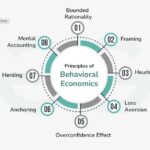
Behavioral Finance for Retirees: Stop Relying on Willpower
March 27, 2026A Thoughtful Way to Put Cash to Work
March 28, 2026
This month’s Austin Wealth Specialists newsletter covers how investors can stay grounded during periods of crisis, what helps to build a more durable portfolio, and a few planning ideas worth revisiting.
Whether you are seeking differentiated alternative investments, creative tax strategies, consistent income, or it’s long-term growth potential you’re looking for, the Austin Wealth Specialists Alternatives platform is built to support your goals.
Note: Information and content compiled as of March 17, 6:00 p.m. CT.
This Month’s Highlights
“If You Can Keep Your Head When All About You Are Losing Theirs…”
Investing during war and periods of crisis requires maintaining a long-term perspective. History shows that equity and bond markets can and will often experience short to medium term extended dips, but typically recover 6-12 months out.
Key strategies during periods of crisis include: holding diversified portfolios, utilizing dollar-cost averaging (DCA) to buy and invest in “quality assets” during dips, allocating to safe-haven assets like the JPMorgan Ultra-Short Income ETF (JPST = 4.40% yield), or sectors like multi-family real estate and storage. Both of which are benefiting from existing U.S. domestic trends and generational demographic shifts.
Building a Durable Portfolio
A strong, diversified financial plan is built with uncertainty in mind. Markets shift, prices rise and fall, leaders come and go. Nations negotiate, shift alliances, even go to war. These events are not rare interruptions, they are part of history.
Private Credit Is the Current Headline Story
One must remember: There is good credit and bad credit. It is highly unlikely that all private credit will go bad. The asset class is currently experiencing a “cyclical normalization” with rising defaults and significant stress.
On Oil and the Fed
Jeff Currie from Goldman Sachs is one of the best commodity analysts. Here is his take on oil prices: Crude Oil Apr 26 (CL=F @ $95.00).
Federal Reserve policymakers left rates unchanged at this week’s Fed meeting. The recent rise in oil prices is viewed as a temporary headwind that is likely to delay—but not ultimately deter—the Fed’s path toward a remote possibility of one rate cut this year.
Market Review & Summary
Last month, we outlined that U.S. equity valuations were stretched by many trusted measures. Market historians had pointed out that, historically, the fourth year of an extended equity bull market usually see corrections of -10% or greater. There are 4 key themes now defining markets in 2026: shifting geopolitics, AI investment leadership, energy (now a supply issue) and data center demand and private credit liquidity risks.
A perceived threat from all things AI—including a revaluation of software and financial services credit—and a global oil shock are not the only catalysts indicating a possible prolonged economic slowdown. February payrolls showed the U.S. economy losing 92,000 jobs, which was well below estimates of a 55,000 gain. Then, Q4 GDP came in at a paltry 0.7% annualized, far below expectations. Consumer sentiment fell to 55.50 points in March, according to the University of Michigan, with the survey director noting that early-month optimism was “completely erased” once the Iran conflict escalated.
What Does It All Mean?
Global markets are now simultaneously repricing geopolitical, inflationary, credit, and growth risk. That is not a recipe for a quick, V-shaped recovery. Until the Strait of Hormuz reopens, private credit stabilizes, and economic data stops deteriorating, assume the path of least resistance remains lower in global equities and bonds.
Ignoring political jawboning, the Fed can only justify lowering rates if inflation is clearly under control. Cutting rates makes borrowing money cheaper, which stimulates spending and investment, which is ideal when things are slowing down. But if inflation is running hot, easier money risks pushing prices even higher, pushing inflation higher ahead of economic growth.
The Fed’s inflation target is 2%. Since the post-Covid spike in late 2020, inflation has remained running higher than that target. We were recently — astoundingly — actually making progress back towards the 2% goal despite unprecedented tariffs pressuring prices higher.
And now, another war is driving energy prices through the roof.
The Fed can’t cut rates in this environment, and will have trouble signaling any confidence in their ability to for the rest of the year.
Four Books to Review During These Volatile Times
Note: At times like this, Warren Buffett, Jamie Dimon, John Templeton and Howard Marks often say: “step back, do research and start a good book”. All consider daily reading the most crucial habit for success, driving knowledge accumulation akin to compound interest. These investors often spend 60-70% of their day reading and thinking, which aids in processing information, sharpening decision-making, and identifying investment opportunities.
- Rounding Third and Heading for Home: How to Hit a Home Run in Retirement Using Tax and Income Strategies of the Wealthy — Brian Raleigh, President and Founder of Raleigh Wealth Solutions
- Live Smart-Retire Rich: Smarter Ways to Become Wealthy — Daniel Goodwin, Chief Investment Strategist at Provident Wealth Advisors
- Tax-Free Wealth: How to Build Massive Wealth by Permanently Lowering Your Taxes — Tom Wheelwright, CPA
- A View Into the World of Alternative Investments: A Collection of Research & Resources — Jim Cone and Angela Ramírez, Panorama Financial Group
Something to Consider: Diversified & Disciplined Self-Storage
Enduring Fundamentals
Despite economic headwinds, self-storage fundamentals remain intact. Delayed homeownership, later household formation, increased renter mobility, and population migration into Sun Belt and Southeast markets continue to support long-term demand. The asset class benefits from short lease durations, granular tenant diversification, low historical default rates, and the ability to reprice rents frequently.
These characteristics provide a level of cash flow visibility and operational control that is increasingly attractive to investors seeking resilience through economic cycles. Capital markets remain open for self-storage acquisitions and refinancings, particularly for seasoned operators. Local and regional banks, CMBS lenders, and life insurance companies continue to deploy capital for stabilized assets, with borrowing costs generally approximating cap rates for well-performing facilities.
How Investors Are Allocating Capital Today
Retail and family office investors are largely product agnostic. Allocation decisions are driven by yield durability, total return potential, sponsor reputation, liquidity profile, and perceived downside protection rather than asset class loyalty.
Self-Storage Industry Statistics 2026 — Key Takeaways
The U.S. self-storage industry generates over $50 billion in annual revenue across more than 60,000 facilities and 2 billion+ net rentable square feet (NRSF).
Self-storage remains one of the highest-performing and consistent commercial real estate asset classes over the past two decades. Recent transactions have shown that disciplined institutional operators can often deliver 4-6% annual cash on cash distributions, while possibly achieving a 2-2.5 MOIC at liquidation over 5-7 year investment periods. Returns stated are for illustrative purposes only.
70%+ of facilities are still independently owned, but that share is shrinking as REITs and private equity accelerate acquisitions.
National occupancy averages approximately 92% for institutional operators, and ~82% overall, with significant variation by geographical market.
Institutional operators have become increasingly sophisticated at maximizing revenue per available square foot (RevPAF), which has emerged as the key performance metric in the industry. The national average RevPAF currently sits around $14–$17 per square foot annually, though top-performing facilities in strong markets can achieve $22–$30+ per square foot.
Transaction volume exceeded $10 billion in 2024, with cap rates ranging from 5.0%–7.5% depending on asset quality and market.
New supply is peaking at an estimated 51.1 million NRSF in 2026, after which the construction pipeline is expected to moderate.
A recent storage industry research piece, by Daniel Murphy of Panorama Financial Group, highlights several key themes.
Compared to the 2019–2022 capital markets environment, the current fundraising landscape for private self-storage funds is materially more selective. Elevated interest rates, trade policy shifts including tariffs on construction materials, rising labor and insurance costs, and ongoing geopolitical risk have increased caution. While capital remains available, it is increasingly concentrated with operators demonstrating predictable, in-place cash flow, institutional-grade underwriting, and proven operational execution rather than forward dependent assumptions. Self-storage continues to attract interest due to its historical resilience, operational flexibility, and durable income characteristics.
Investors are increasingly asking a simple question: Where is my risk adjusted return most defensible today? Feedback from our sponsor and distribution network can be summarized succinctly: investors are seeking deals where they will not face reputational, career, or litigation risk. This has elevated the importance of conservative structuring, clear cash flow sources, and institutional-quality governance.
Worth Noting: Oil — Here’s What You Need to Know
The Strait of Hormuz Is an ‘Acute Vulnerability’ for Global Trade
The Strait of Hormuz provides the only sea passage from the Persian Gulf to the open ocean.
This 21-mile-wide chokepoint is crucial for global investors. It also affects the families filling their truck in Ohio, the truck driver hauling goods across Europe, and the factory worker in Mumbai whose employer depends on affordable energy. When risk materializes in the Gulf, it cascades far beyond the Middle East.
Oil is a mean reverting “physical” commodity due to the OPEC countries’ ability to increase/decrease production. On prices spikes, it tends to mean revert lower due to short hedging pressure and increased production.
During 2023–2025: 20% of the world’s liquefied natural gas (LNG) and 25% of seaborne oil trade passed through the strait annually. On any given day, approximately 21 million barrels of oil pass through the tiny strait sandwiched by Iran and the United Arab Emirates—roughly 20% of the global supply. The magnitude of the resultant supply-chain disruption will be largely dependent on how long the fighting continues.
Some 30% of the world’s fertilizer flows through the strait, and the current disruption is happening just before the U.S. spring planting season. Fertilizer makes crop yields larger and reduces loss from disease and bugs. If it goes up 20% in price, the farmer is going to need to charge 20% more for corn, to make the same amount of margin and that will be passed on to the consumer.
Oil prices will affect global economies in a range of ways.
The math: “20 million barrels of oil used to move through the strait on an average day before the conflict. The IEA’s planned release is for 400 million barrels. It’s a positive impact, but it is estimated to only cover roughly 20 days of supply disruptions, or roughly 3-4 weeks/20-22 days depending on the source. While representing a significant amount of oil, it only equates to about 4 days of total global demand. It’s not like it’s six months of supply.”
Duration/Timeline: The release is designed for a roughly three-week to one-month period of supply shortages, with logistical delivery of the oil taking weeks or months to fully impact the market. The market is building in “risk premium” until supply comes back online.
What We’re Watching
According to the report, the most severe risks facing the global economy in the next two years were: Geopolitical: Geo-economic confrontation; Geopolitical: Global armed conflict; AI Fears & technological: Misinformation and disinformation. Three of the 10 forecasted risks have occurred in the last 90 days.
Global crisis’s will and do happen. They tend to appear in 6-8 year cycles. On average, over the last century, equity corrections of greater than -10%, but not more than -20%, have occurred once every 12-18 months. The average correction lasts 54 days and is -13.5%.
The message: Stay the course and invest with discipline in non-correlated and diversifying assets.
A Deeper Look at Private Credit
New Private Credit Data Contradicts the Recent Risk Narrative — Cliffwater
Currently it is believed that deep discounts in publicly-listed BDC prices, relative to underlying loan values, signal trouble ahead for the entire private credit and private debt market. History shows just the opposite; private debt returns are disconnected from deeply discounted BDC public market.
The exhibits show five post-Financial Crisis periods when the public BDC market traded at a deep price discount. In each case, the subsequent return on private debt, measured by the Cliffwater Direct Lending Index, performed at or above its yield. The price discounts averaged -26% for the first four periods with subsequent one-year private debt returns averaging +12.38%. The fifth period is today, reporting a -16% discount. Given no recession in sight, Cliffwater is skeptical this time will be any different from the previous four events.
Private debt typically offers a higher return than traditional fixed-income investments because of its illiquidity, default risk, and complexity. Private debt/credit can improve returns and provide diversification. However, it is not a substitute for ones “cash/money market,” and should be viewed as a complement & diversifier to traditional fixed-income strategies.
Private Credit Is Still Safer Than Banks
Though several funds have come under stress in recent weeks, they’re less likely than traditional banks to cause a broader financial crisis. See the KBW Regional Banking Indx (KRX) -12% in last 30 days.
Call-to-Action Calendar
F2026 Financial Calendar Highlights
Q1 (January–March):
- Set Goals: Establish SMART goals for savings and debt reduction.
- Automate Savings: Set up automatic contributions to 401(k), IRA, and brokerage accounts.
- Tax Prep: Organize documents; review 2025 tax-advantaged account contributions.
Q2 (April–June):
- Tax Day (April 15): File income tax returns.
- Mid-Year Checkup: Review budget vs. actual spending to make adjustments.
- Emergency Fund: Ensure 3-6 months of expenses are saved.
This Month’s Thank-Yous
Charlie Bilello and his great weekly work @ The Week in Charts Newsletter.
Let’s Talk About Your Plan
If this month’s themes have you reassessing how your portfolio is positioned for turbulent times, reach out to Austin Wealth Specialists in Austin, TX — keith@austinwealthspecialists.com | 512-963-6883. Visit www.austinwealthspecialists.com for more news.
Disclosure: Securities offered through Great Point Capital, LLC, Member FINRA SIPC. Investment Advisory Services offered through Vann Equity Management. Great Point Capital LLC, Vann Equity Management, and Austin Wealth Specialists are separate and unaffiliated. Educational only and not a recommendation or offer. Investing involves risk, including possible loss of principal. Not tax or legal advice. Consult your tax and legal advisors about your specific situation.